You’re offline, but every Efiwe page you’ve loaded — including this one — is still available.

Efiwe Selected for UNDP’s timbuktoo Launchpad, Cohort 1

Efiwe has been selected for Cohort 1 of the timbuktoo Launchpad, the United Nations Development Programme’s (UNDP) continent-wide incubation programme for African startups. Efiwe was chosen from around 2,000 applications from across Africa. The timbuktoo Launchpad was formerly known as the Pan-African Incubation Network. Cohort 1 is the first group of startups to go through the programme under its new name.

Same App, Same District, Different Room: What 54 Boys at Government College Surulere Taught Us

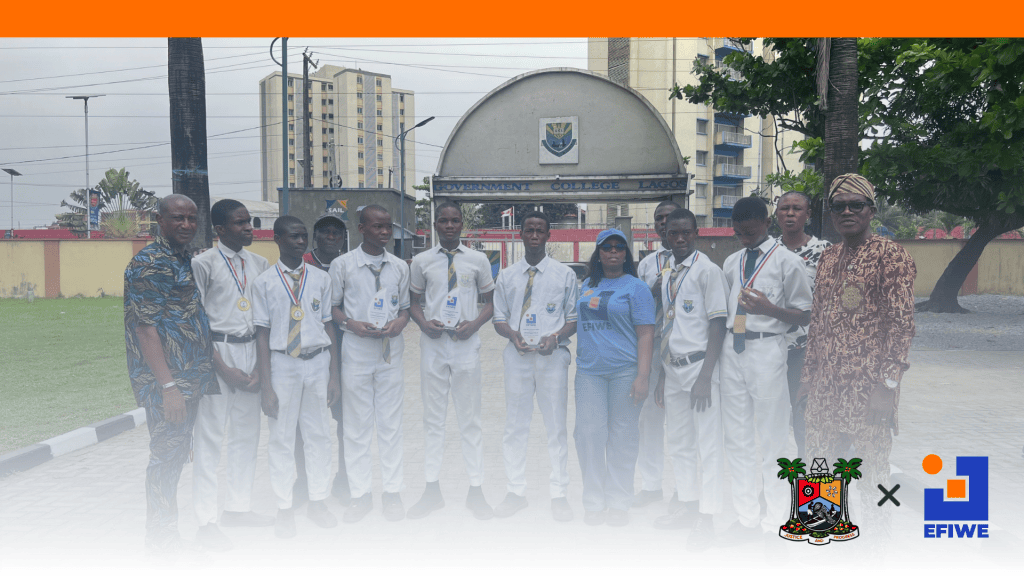
In September, 54 boys at Government College (Senior), Surulere, logged into Efiwe. Their assignment was the same one we gave the girls at New Era Girls’ School a month earlier: complete all 191 HTML challenges. Eleven boys did. Four of them then passed the HTML capstone, a test the New Era girls never had to sit, because it did not exist yet. Between them, the boys completed 3,563 challenges and earned 612,052 points. Those are good numbers for a first cohort. They are also less than a third of what 41 girls completed at New Era (12,323 challenges). The gap is not at the top. It is in the middle: the typical New Era girl finished all 191 HTML challenges, while the typical Government College boy stopped at challenge 14.

1.4 MB vs 1.1 GB: Why Efiwe 1.5 Grades and Other Models Explain

Efiwe 1.5 is 1.4 MB in download size. The smallest of the ten external language models you can now download on Efiwe is 105 MB, and the largest is 1.1 GB. That size gap explains almost everything about how the two kinds of model share the work. On October 12, 2026, we added ten external small language models (SLMs) that run on your phone: SmolLM2 135M, LFM2 350M, Gemma 3 270M compact, SmolLM2 360M, Gemma 3 270M, LFM2 700M, Qwen 2.5 0.5B, LFM2 1.2B, Gemma 3 1B and Qwen 2.5 1.5B. They write fuller, friendlier explanations. Efiwe 1.5 still grades your code offline and whenever an on-device model is selected, and it still works out what is wrong with it, across all eight courses: HTML, CSS, JavaScript, Tailwind, Python, PHP, SQL and Prompt Engineering. This article explains why, and how to pick the right setup for your phone.

Efiwe Launches Reading Levels and Baseline-Endline Assessments

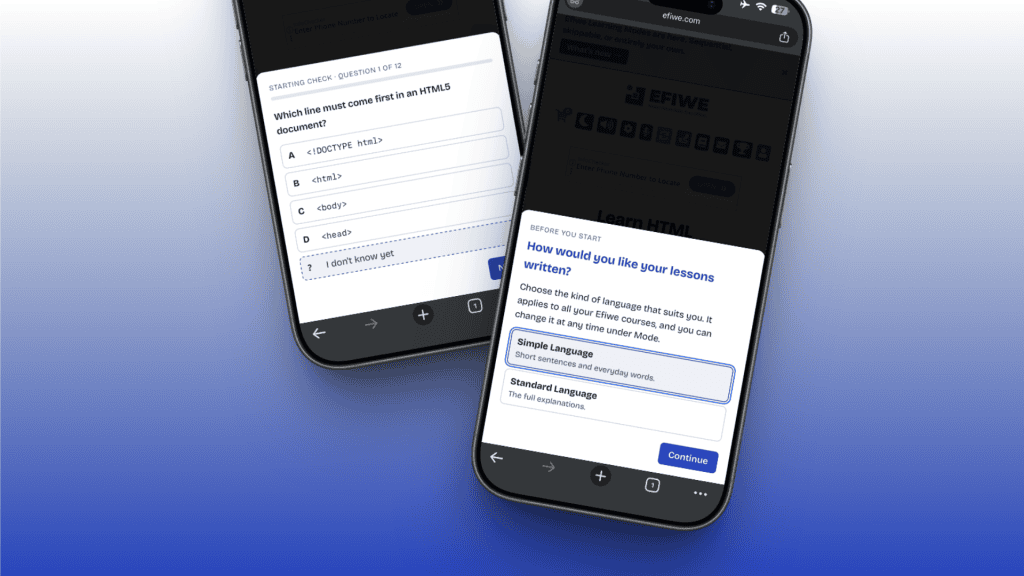
Efiwe, the mobile-first, AI-powered coding education platform, today launched two features across all eight of its courses: reading levels and baseline and endline assessments. Learners can now choose to read every challenge in Simple Language or Standard Language. Before a course they take a short baseline check, and at the end a matching endline check shows how far they have come. Both features are live now in HTML, CSS, JavaScript, Tailwind, Python, SQL, PHP and Prompt Engineering, for all of Efiwe’s 22,747 learners in 159 countries. Like the rest of the core platform, they are free.

Efiwe’s Offline Tutor and Read Aloud Get a Big Upgrade

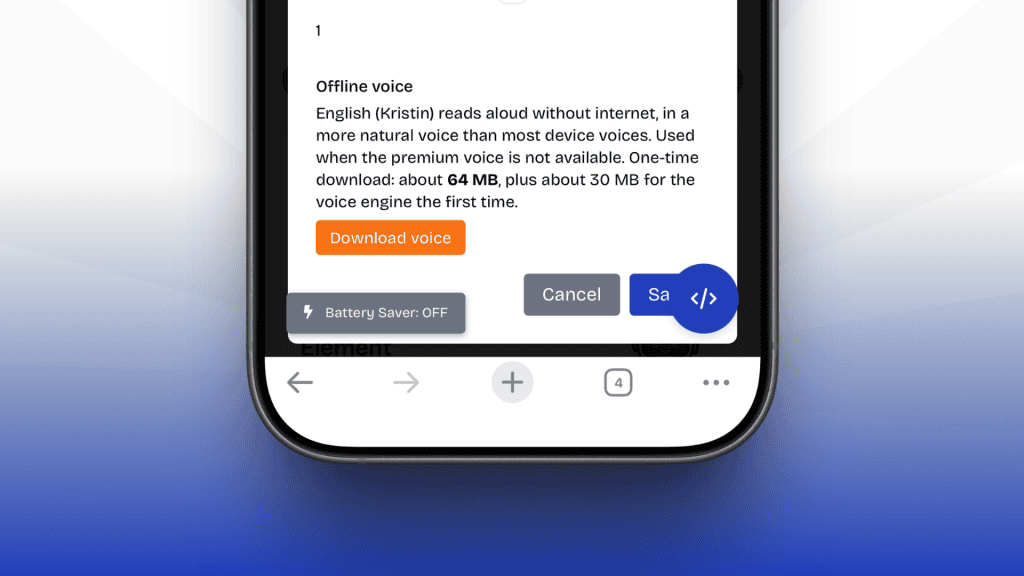
Efiwe has worked offline since day one. Today we are upgrading the two things learners lean on most when the connection drops: the AI tutor and Read Aloud. You can now download one of ten AI models that run on your phone, and natural-sounding offline voices for Read Aloud. Until now, learning offline meant Efiwe 1.5, our on-device model that checks your code and explains your mistakes, while Read Aloud used your phone’s built-in voice whenever ElevenLabs was not available. Efiwe 2.0 in the cloud gave the richest explanations, but only online. This release brings fuller explanations and a more natural voice to learners with no connection, and takes nothing away.

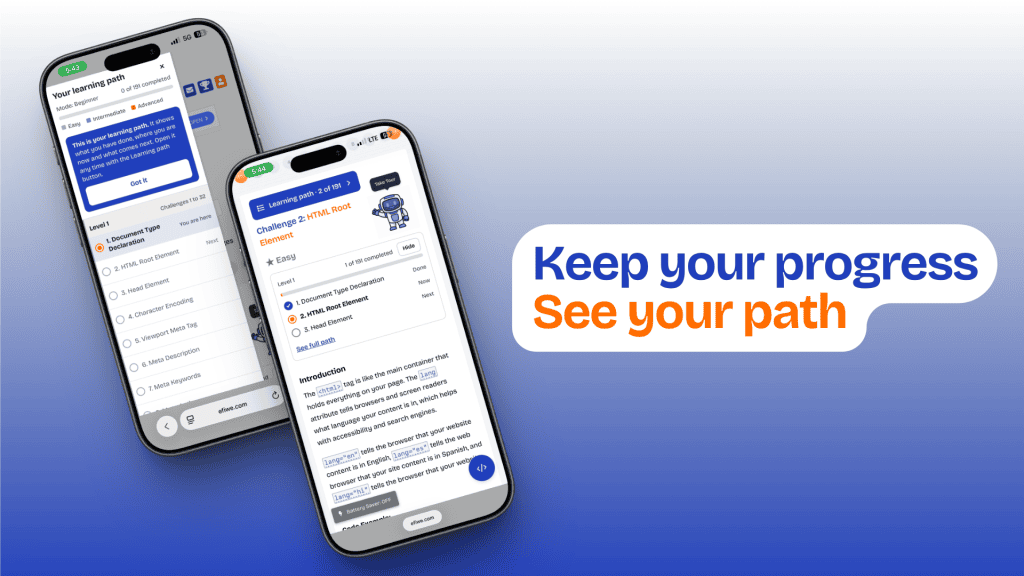
Keep your progress, see your path: what is new on Efiwe

Over the past two days, Efiwe shipped a set of updates that all come from the same place: what learners told us. A learner should never lose the work they have done, and should always be able to see where they are and what comes next. This is everything that changed, across all eight courses. Efiwe has three learning modes. Beginner takes every challenge in order. Skipper lets a learner skip what they already know. Explorer lets them pick the challenges they want. Until now, changing mode part-way through a course sent the learner back to the very beginning, and their points, badges and completed challenges were wiped. Learners complained about this, and they were right.